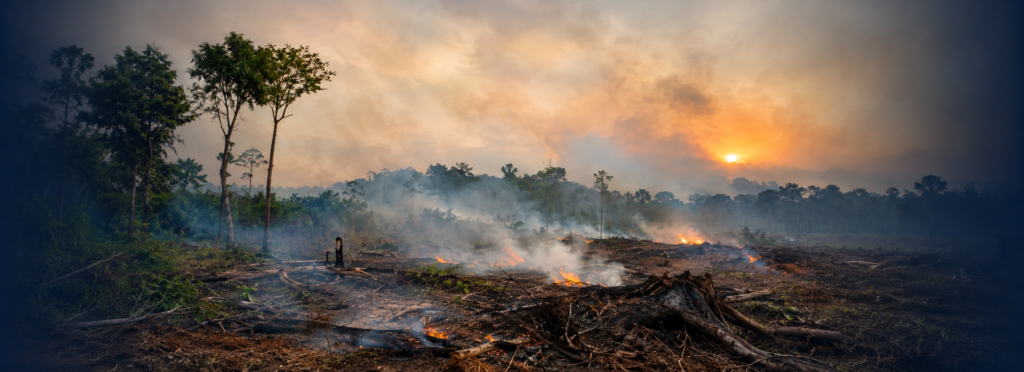
Social media now carries public debate, journalism, and criticism. In October 2026, users reported that posts about forest and land fires (“Karhutla”) reached fewer people than usual. The Ministry of Communication and Digital Affairs (“Komdigi”) denied restricting the reach of those posts and pointed users to platform appeals, saying platforms run recommendation and moderation systems. Those are official positions, not proof of what happened in each case. They raise a wider question about online content removal in Indonesia.
When information becomes hard to find, who answers for it? The power to restrict information needs accountability.
Who Controls What People Can See Online?
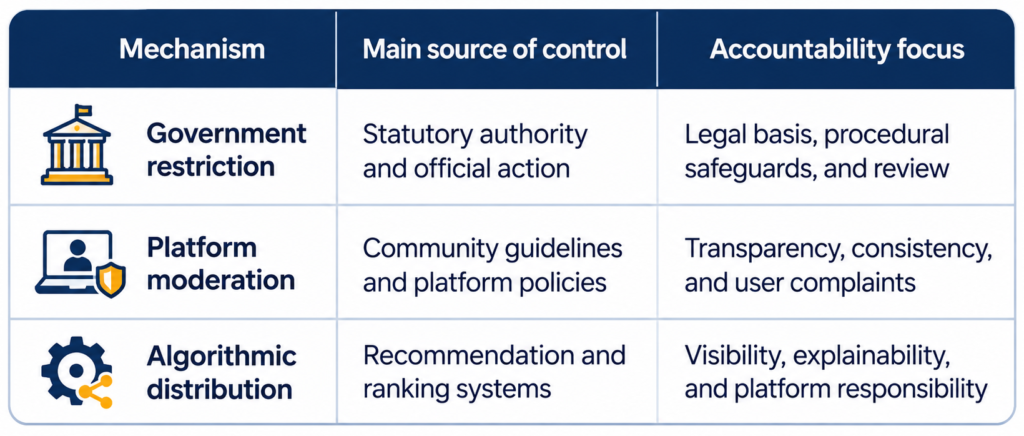
Three mechanisms shape what people see. The government may act under Article 40 of Law No. 1 of 2024 on the second amendment to the Electronic Information and Transactions Law (“ITE Law”), which lets it terminate access to unlawful electronic information or order platforms to do so. That power does not show a particular restriction was justified.
Platforms act under their own community standards and terms of service. They can remove posts, suspend accounts, or limit features, and that discretion is bound by legal duties toward users.
Recommendation systems decide how widely content travels. Reduced reach is not removal or suspension. A drop in views alone does not prove deliberate shadowbanning or a government instruction. Their differences should not let any party avoid accountability.
Where Are the Legal Limits of Content Restrictions?
The 1945 Constitution protects expression and information. Article 28E(3) protects the freedom to associate, assemble, and express opinions, Article 28F protects the right to communicate and obtain information, and Article 28D(1) guarantees fair legal certainty. Article 28J allows limits set by law solely to respect others’ rights and meet demands of morality, religion, security, and public order.
On 29 September 2026, the Constitutional Court added a procedural limit in Decision No. 311/PUU-XXIV/2026 on Article 40(2b) of the ITE Law. The Court kept the authority but held the provision conditionally unconstitutional unless the government first issues a digital notification or written notice stating the reasons, whether it cuts access itself or orders a platform to do so. Reasons let affected people understand and challenge a restriction. The decision does not govern platforms’ own moderation decisions.
Under Article 10 of Minister of Communication and Informatics Regulation No. 5 of 2020 on private electronic system operators, as amended by Regulation No. 10 of 2021, platforms hosting user content must maintain governance rules, a public reporting facility, and complaint handling. On reports of prohibited content, they must respond, examine the report, notify the user, and reject reports about permitted content. That is not a right to a full explanation or successful appeal after every removal, so platform review still warrants scrutiny.
Legality is not legitimacy. Article 19(3) of the International Covenant on Civil and Political Rights, ratified through Law No. 12 of 2005, permits restrictions only when provided by law and necessary to respect the rights or reputations of others or to protect national security, public order, public health, or morals. That test is especially relevant to restrictions on criticism of public policy, journalism, and environmental documentation, though public interest is no immunity from the law. A legal basis does not end the inquiry into how a restriction is applied and whether the affected person can challenge it.
What Protection Do Users Have When Content Is Removed?
Protection starts with knowing who acted. A government instruction and a platform decision follow different rules and lead to different remedies, so users should know the source and stated basis of a restriction.
Complaint and appeal tools matter only if they produce real review rather than an automated reply, a fair question given that Komdigi points users to them.
Legal remedies depend on the source. Government action may call for administrative or judicial review. Platform moderation brings in contract terms, platform procedures, and possible civil obligations. A removed post does not automatically support a lawsuit or guarantee reinstatement.
Meaningful accountability needs more than a complaint button. It needs accessible explanations, reviewable decisions, and remedies when restrictions are unjustified.
When your content is restricted
- Identify whether the action came from a government instruction or a platform decision.
- Preserve the original content, URL, dates, notifications, and all messages with the platform or authority.
- Request or review the stated reason for the restriction, and record any appeal outcome.
- Use the applicable complaint or review mechanism.
- Evaluate legal remedies where significant rights are affected.
Content governance is not only a question of whether information can be removed. It is also a question of who decides, what justifies the decision, and whether the affected person can challenge it. Government action should be accountable, platform moderation responsible, and public access to information protected.